

What should you know before buying custom security doors?
Your front door is the first line of defense for your family and your investments. If you are thinking about upgrading, custom security doors give you a powerful mix of safety, style, and long-term value. This guide walks you through the key points in simple language so you can choose with confidence.
As an Indian investor or homeowner, you already think in terms of risk, return, and peace of mind. A strong security door works like a smart long-term investment. It protects your property, increases perceived value, and can even reduce other security costs over time.
Let us explore how to pick the right door, what features really matter, and how to get the best value for your money.
Why choose a custom security door instead of a standard one?
A standard home security door is made in fixed sizes and basic designs. It may not fit your frame perfectly and often looks very generic. A custom option is designed for your exact opening, preferred style, and security level.
Key benefits include:
- Perfect fit: No gaps that weaken security or let in dust, noise, and hot air.
- Stronger build: You can choose thicker steel, better locks, and stronger frames.
- Better look: Match your home’s architecture, from modern flats to luxury villas.
- Smart money choice: One premium door today can cut future repair, repainting, and upgrade costs.
For some homeowners, insurance providers may offer better terms if your house has certified burglary-resistant doors. Even if the discount is small, over many years it supports your return on investment.
Types and materials compared
The material you choose decides how secure, heavy, and long-lasting your door will be. Here are the main choices you will see.
Steel security doors: Strength and cost balance
Steel is the most popular option for a serious home security door. It offers high resistance to force and cutting tools while staying relatively slim.
- Pros: Very strong, good fire resistance, works well with a multi-point locking system.
- Cons: Needs good paint or powder coating to resist rust, especially in coastal areas.
- Best for: Urban homes, ground-floor apartments, and villas looking for a strong anti-theft solution.
When you look at a custom steel security door, ask about steel thickness, internal reinforcements, and quality of welding. These small details make a big difference in real attacks.
Wrought iron designs: Security with style
Wrought iron security doors are popular when you want a grand entrance and clear strength together. They often sit in front of a main wooden or glass door.
- Pros: Decorative, durable, good for ventilation with security.
- Cons: Heavier, may cost more for complex designs, still needs rust protection.
- Best for: Luxury homes, bungalows, and villas where appearance matters as much as security.
Aluminum and composite options
Aluminum and composite doors are lighter and resist corrosion well. This makes them useful in coastal zones with salty air and moisture.
- Pros: Lower maintenance, no rust, many color options.
- Cons: Usually not as strong as thick steel against heavy tools.
- Best for: Apartments with limited exposure to direct attacks, or for secondary entrances.
Key features that actually improve security
Do not focus only on the door panel. A strong door with a weak frame or lock will still fail. Pay attention to these points when you compare products.
Locks and multi-point systems
A normal single latch lock is easy to force. Look for:
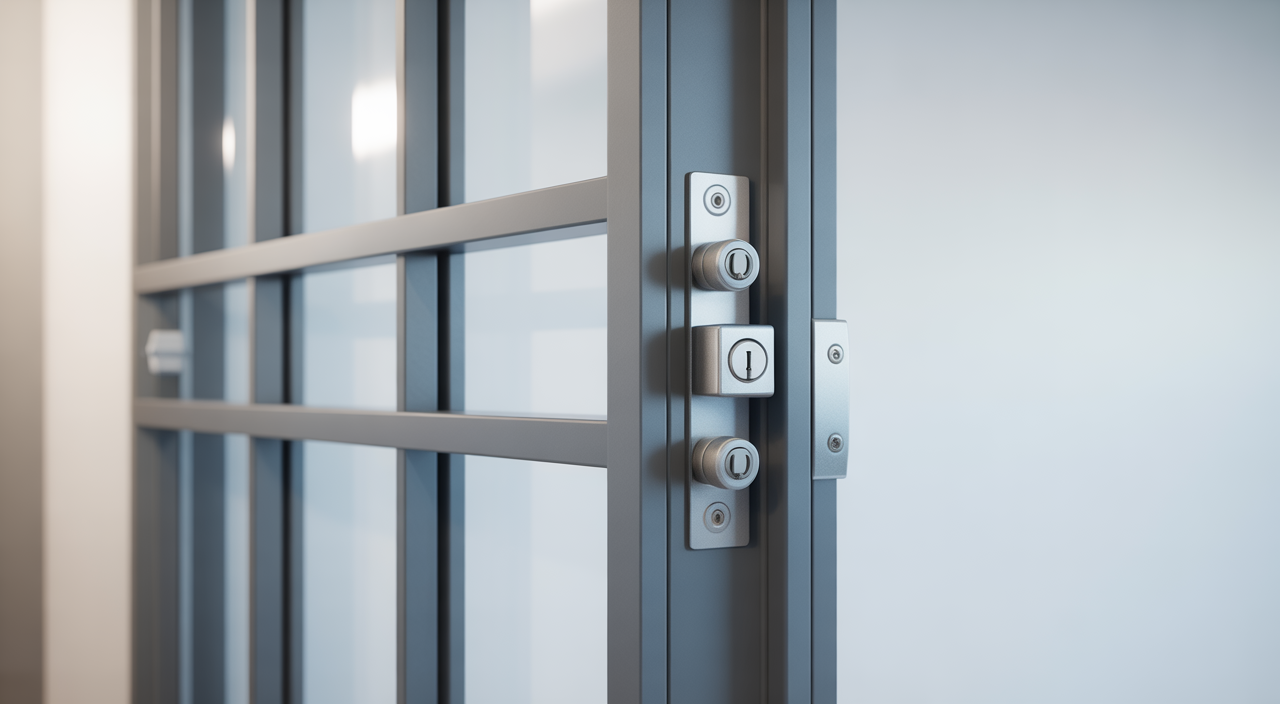
- Multi-point locking system: The door locks at several points into the frame, from top to bottom.
- High-security cylinder: Designed to resist lock picking and drilling.
- Internal reinforcing plates: Extra metal around the lock area to stop it from being kicked in.
Frame reinforcement and heavy-duty hinges
Weak frames and hinges are common failure points in break-ins. Ask your supplier about:
- Door frame reinforcement: Steel or strong alloy frames fixed firmly into the wall.
- Heavy-duty hinges: Oversized hinges with strong screws, often with hinge pins that cannot be removed from outside.
- Anti-pry features: Small design details that stop tools from slipping between door and frame.
Security door certifications in simple terms
Good manufacturers test their doors to meet certain standards. When you hear about security door certification, it usually means the door has been tested against impact, drilling, and forced entry.
For you as a buyer, the key idea is this: a certified door has been proven in a lab to handle specific levels of attack or pressure. Ask your supplier which tests their products meet and what those ratings mean in real life.
Design and customization choices
The best part of going custom is that you do not have to sacrifice beauty for safety. You can choose:
- Colors and textures that match your paint, tiles, or façade.
- Simple, modern lines or detailed grills and patterns.
- Glass inserts with impact-resistant or laminated glass instead of plain glass.
If the brand offers a digital design tool, take a few minutes to build your ideal door layout. It is like testing different portfolios before you invest your money.
Cost breakdown and what to budget for
Prices vary by material, size, design, and security level. As a rough guide, a basic residential steel home security door will cost less than a fully engineered impact-resistant or bullet-resistant option.
When comparing quotes, look beyond the base price. Include:
- Professional installation cost.
- Hardware upgrades like advanced locks or security screen doors.
- Future maintenance such as repainting or lubrication.
Think of it like a long-term asset. A slightly higher cost for a strong, durable door often works out cheaper over 10 to 15 years than replacing a weaker door multiple times.
Real-world scenarios for Indian homeowners
Urban apartment in a busy city: Here the focus is on a strong burglary-resistant door to protect cash, jewellery, and electronics. A steel or composite door with multi-point locks and strong hinges is a smart choice.
Independent house or villa: You may want both looks and higher-level protection, including burglar-proof doors and possibly impact-resistant glass for large openings. This is also where gate design, outdoor lighting, and even elements like safe room doors for critical spaces can complement your main entrance door strategy.
Maintenance, warranty, and aftercare
Like any important asset, a security door needs basic care to perform at its best.
- Clean the surface with mild soap and water to avoid dust buildup.
- Check locks, hinges, and screws twice a year and tighten if needed.
- Touch up any paint chips quickly, especially in coastal or very humid areas.
Before you buy, ask about warranty on the structure, hardware, and finish. Longer, clear warranties signal confidence in the product and protect your investment.
FAQs about custom security doors
Q1. How do I know what level of security I need?
Start with your location, building type, and what you are protecting. Ground-floor homes in busy areas usually benefit from strong steel doors with multi-point locks and reinforced frames. If you store high-value assets or live in a very exposed area, you can explore higher-grade burglary-resistant or impact-resistant models with advanced hardware.
Q2. How long does installation usually take?
For most homes, professional installation finishes in a single day, sometimes within a few hours. The door is measured in advance so it fits perfectly. The team then removes the old door, prepares the frame, installs the new one, and checks that every lock, hinge, and seal works smoothly before handing it over.
Q3. Can a security door also help with noise and heat?
Yes. A well-sealed door with solid construction can reduce outside noise and improve insulation. This is especially useful in Indian cities with traffic and heat. Over time, this can also support lower cooling costs, which adds another small but steady return to your investment.
Q4. Will a security door spoil the look of my entrance?
Not at all if you choose the right design. Modern custom doors offer sleek, minimal styles as well as decorative options. You can match colors to your interior theme or external façade so the door looks like a premium design feature, not just a safety device.

